
Estimate each food separately. Start the longer one first. Start the shorter one after the difference between their durations, then keep separate reminders for shaking, turning and checking.
On this page
Starting both foods together feels simple, but it only works when their durations are similar. Otherwise the shorter item sits and softens while the longer one finishes. A staggered start solves that problem without changing either food’s cooking needs.
The basic backward-planning formula
If food A needs about 20 minutes and food B needs about 12, start A first and add B roughly 8 minutes later. Both then reach their planned finish together.
The arithmetic is easy. The useful planning comes from choosing realistic durations for the actual quantities, state and appliance—and accounting for interruptions or temperature differences.
With two independent baskets
- Set up each food for its own basket, including amount and fresh or frozen state.
- Check whether the appliance supports independent start and temperature controls.
- Start the longer food immediately.
- Start the shorter basket after the calculated delay.
- Keep the reminder schedules separate; each food may need a different shake or check point.
Some dual-basket appliances include a synchronization mode. It is still worth checking that the durations reflect your portions rather than relying only on a preset food name.
With one basket
A single basket can work when both foods tolerate the same temperature and there is enough space for airflow. Start the longer food, then add the shorter food later. When you open the basket, work quickly: a long pause loses heat and changes the plan.
Use a divider only if your appliance permits it. Keep foods separate when cross-contact, raw juices or different safe-doneness requirements are a concern. If the combined load becomes crowded, cook in batches instead of sacrificing airflow.
When the foods want different temperatures
There are three sensible options:
- Independent baskets: use each food’s preferred setting and synchronize only the finish.
- A safe compromise: choose a shared temperature only when both foods can cook well and safely there, then adjust their durations.
- Two phases: cook one item most of the way, change the temperature, and finish both together. This needs more attention but can work in one basket.
Do not force a shared plan when one food’s safety or quality would be compromised. “Together” is less important than properly cooked.
Allow for real-world differences
Resting: some meats benefit from a rest, which can become useful buffer time. A crisp side usually should not sit covered because trapped steam softens it.
Opening the basket: adding food lowers chamber temperature. A full second basket can also change performance in some dual-zone models.
Check windows: aim for both foods to enter their check window together rather than treating the planned minute as a guarantee. If one finishes first, remove it promptly.
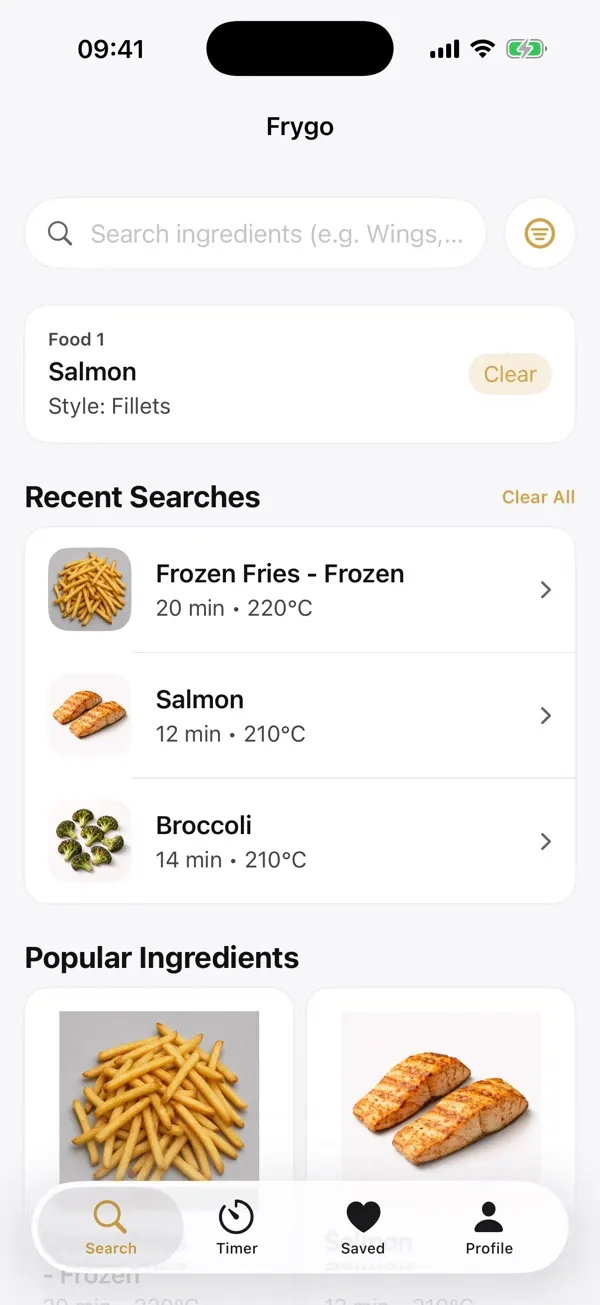
Finish Together builds the staggered plan.
Choose two supported foods and set up each one separately. Frygo calculates the starting sequence, tells you which food begins first and alerts you when to add the second. Each food keeps its own guided reminders along the way.
Your appliance, quantity and preferred crispiness all affect the result. Frygo combines these inputs and guides you through the cook.
These ranges are general guidance, not tested results for every portion and appliance. Use the package and manufacturer instructions for your product and check doneness. Frygo adjusts in-app recommendations to your selections and feedback.
How Frygo creates recommendations →